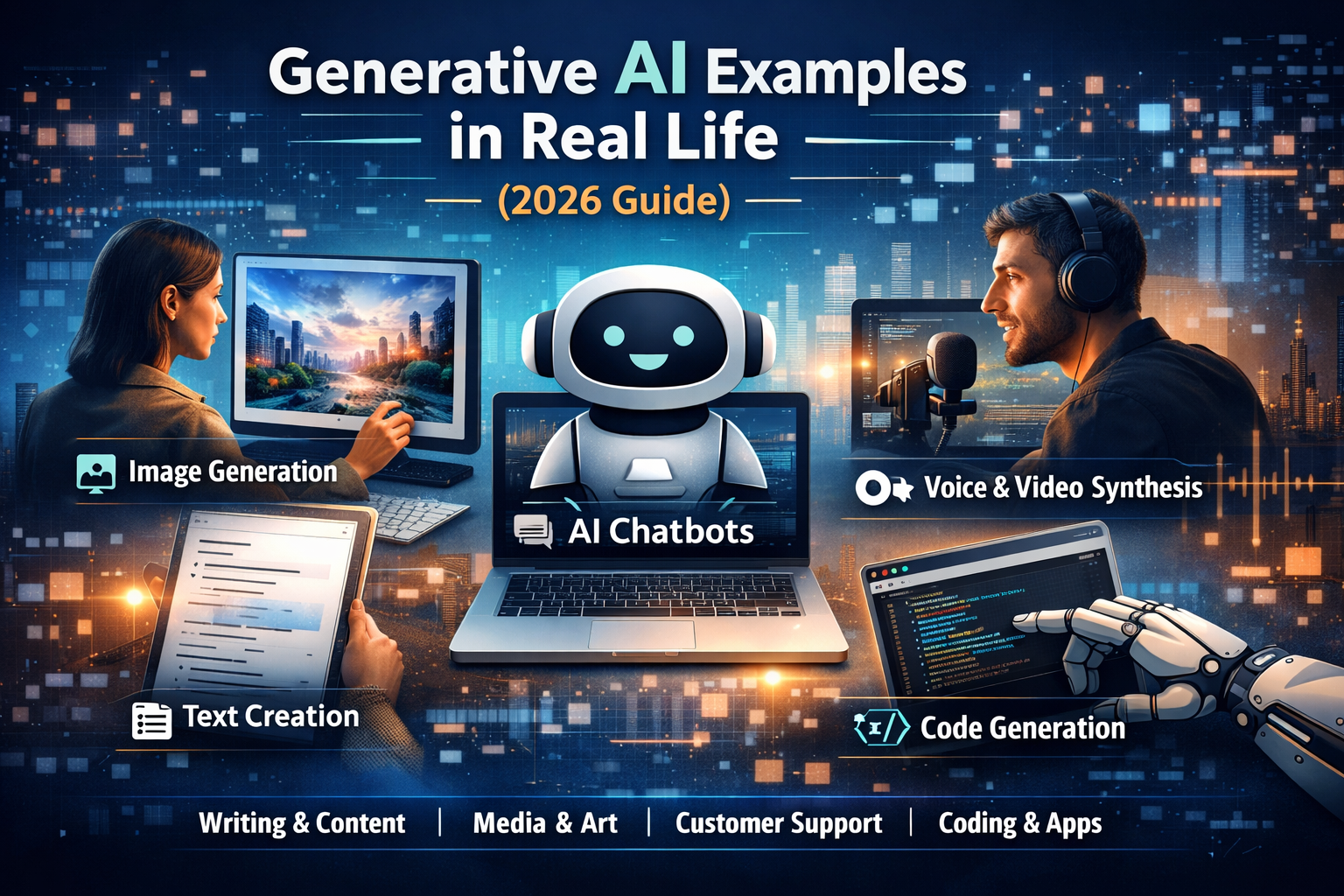
Discover clear, real-life generative AI examples, how they work, where they’re used, and their limits in a simple, beginner-friendly guide.
Introduction
Generative AI is no longer a future idea. It is already part of daily life, often working quietly in the background. From writing help to image creation, these tools are changing how people work and create. This article explains generative AI examples in real life using simple language and practical situations.
What is generative AI in simple terms?
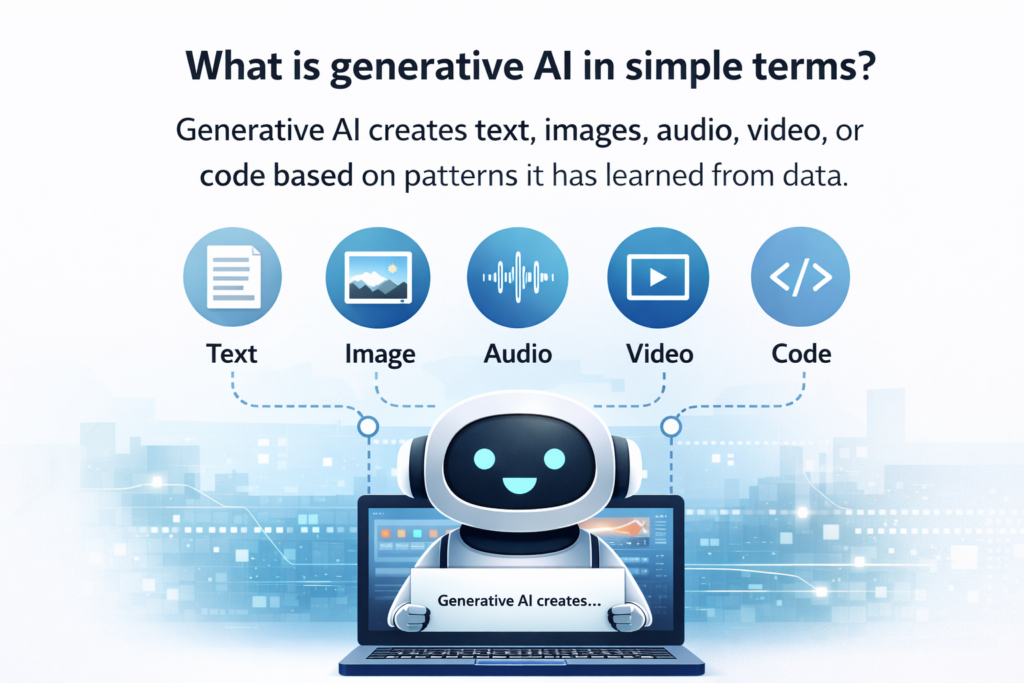
Generative AI is a type of artificial intelligence that creates new content such as text, images, audio, video, or code based on patterns it has learned from data.
Instead of only analyzing information, it produces original output that feels human-made. It works by predicting what should come next, whether that is the next word in a sentence or the next pixel in an image. This makes it useful in many everyday digital tasks.
How is generative AI used in everyday life?
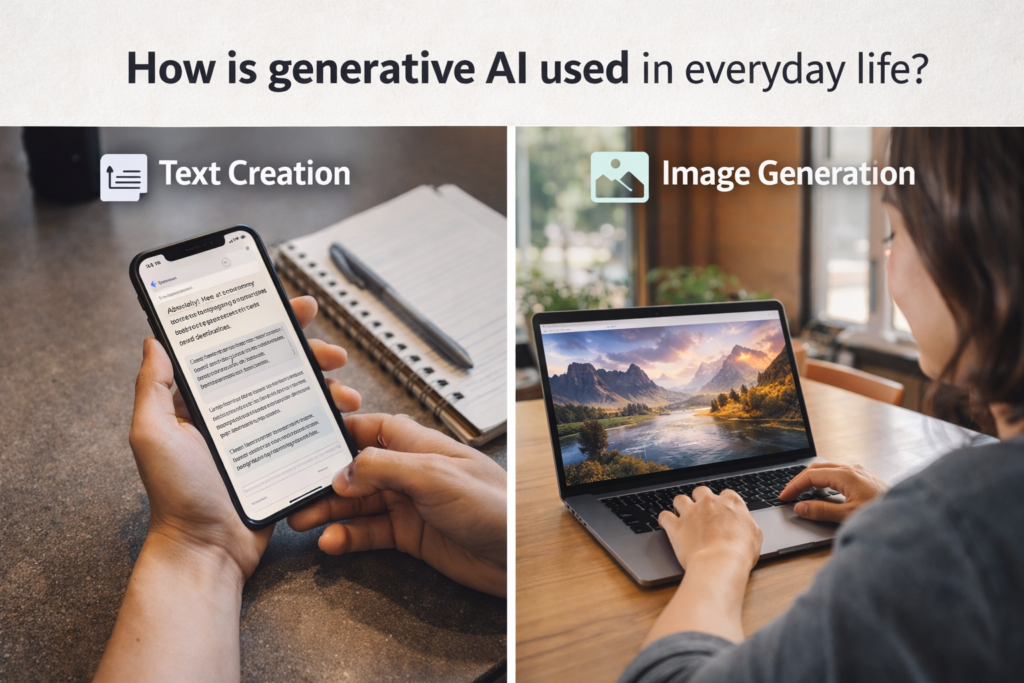
Generative AI is used daily in writing tools, chat systems, image apps, and productivity software. Many people use it without realizing it, especially on websites and mobile apps.
Email suggestions, auto-generated replies, social media captions, and photo enhancement features often rely on generative models. These tools save time and reduce effort by helping users start or complete tasks faster.
What are real-life generative AI examples people already use?
Generative AI is widely used in content writing, image creation, customer support, education, and software development.
People use text-based tools to draft emails, blog posts, and summaries. Designers generate images and logos using prompts. Students get help explaining complex topics. Developers use AI to write and fix code. These examples show how generative AI fits into normal digital routines.
How does generative AI help businesses and professionals?
Generative AI helps businesses automate creative and repetitive work while maintaining speed and consistency. It supports faster decision-making and better communication.
Marketing teams generate ad copies and visuals. Customer service teams use AI chat systems for instant responses. Analysts summarize reports quickly. If you want to understand how this trend connects with broader strategies, see AI in digital marketing 2026 for deeper insight.
an generative AI create images, videos, and voices?
Yes. Generative AI can create realistic images, short videos, music, and synthetic voices using trained models.
Image tools generate visuals from text descriptions. Video tools create animations or talking avatars. Voice systems can read text naturally or clone speech patterns. These tools are used in media, education, and accessibility, making content creation easier for non-experts.
What are the risks or limitations of generative AI?
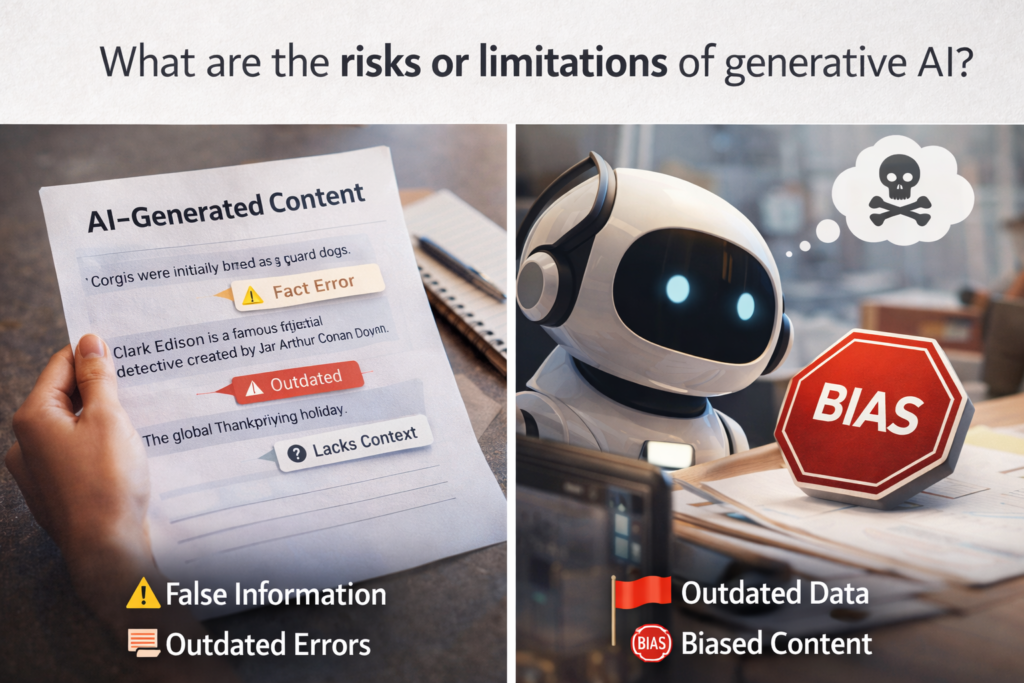
Generative AI can produce incorrect information, biased output, or content that lacks context. It does not truly understand meaning the way humans do.
Because it learns from existing data, it may repeat errors or outdated facts. Users should always review AI-generated content carefully. Responsible use and human oversight are necessary to avoid misinformation and ethical issues.
How is generative AI different from traditional AI?
Traditional AI focuses on analyzing data and making predictions, while generative AI creates new content.
For example, traditional AI might detect spam emails, but generative AI can write a new email from scratch. This creative ability is what makes generative systems more visible and impactful in real-world applications.
Why generative AI is becoming more common now
Advances in computing power, data availability, and model design have made generative AI more accurate and accessible.
Companies now integrate these tools directly into products. Ongoing changes in search and technology also influence adoption, as discussed in Google algorithm updates 2026. These shifts explain why generative AI feels suddenly everywhere.
Learn more about the core concept
For a neutral, widely trusted overview of how this technology works, you can explore Generative artificial intelligence for background and history.
FAQs
Is generative AI the same as ChatGPT?
No. ChatGPT is one example of a generative AI tool, but generative AI includes many systems that create text, images, audio, and video.
Do I need technical skills to use generative AI?
Most tools are designed for beginners. Simple text prompts are usually enough to get useful results.
Is generative AI safe to use?
It is generally safe, but users should verify outputs and avoid sharing sensitive information.
Can generative AI replace human creativity?
It supports creativity but does not replace human judgment, emotion, or original thinking.
Will generative AI keep improving?
Yes. Models are evolving quickly, becoming more accurate, helpful, and widely used across industries.