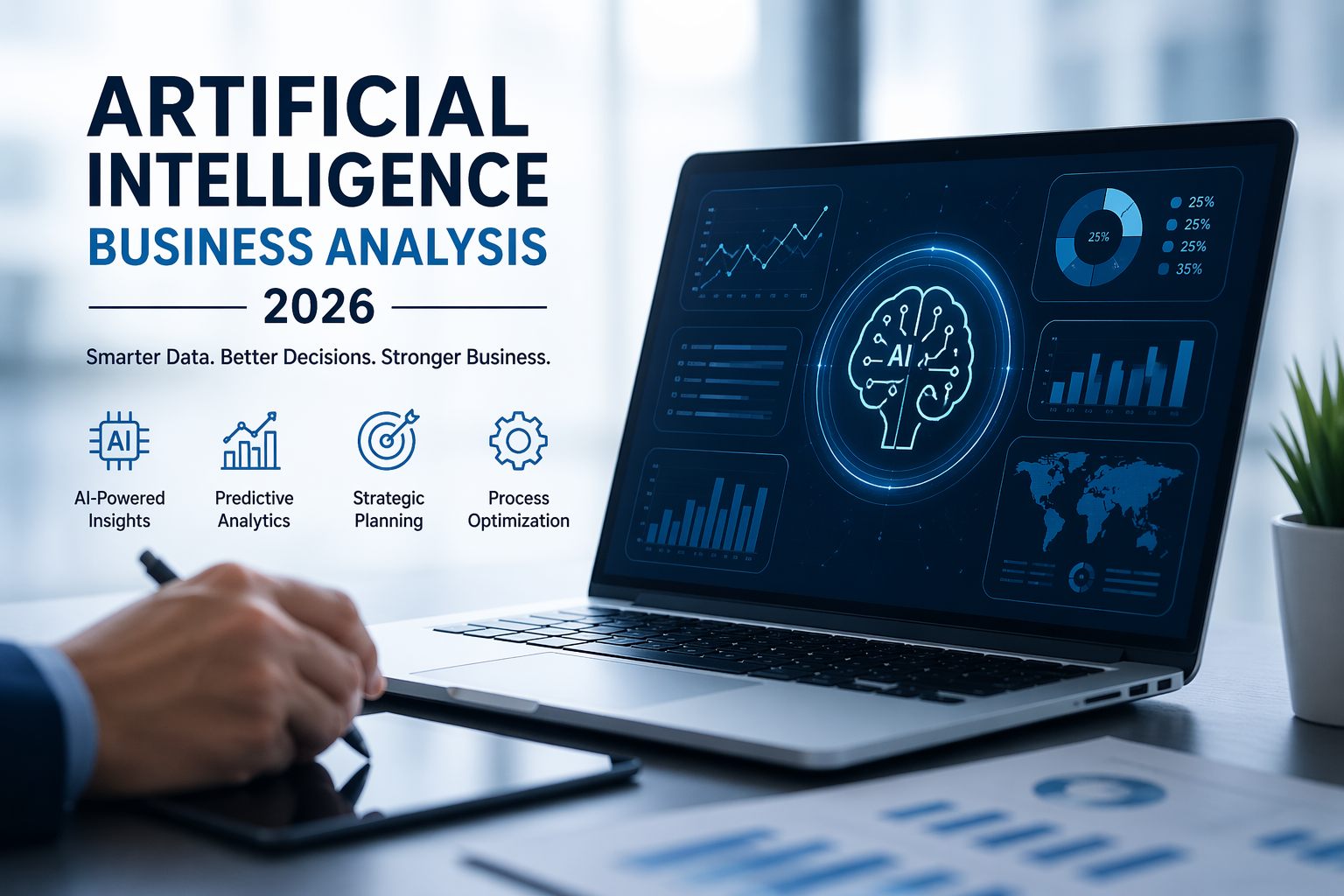
Discover Artificial Intelligence Business Analysis 2026, including its role, applications, benefits, and future impact on modern data-driven business decisions.
Artificial Intelligence Business Analysis 2026
Introduction
Artificial Intelligence (AI) is transforming the modern business landscape at an unprecedented pace. In 2026, organizations are increasingly relying on AI-powered systems to analyze data, predict trends, and make strategic decisions. This shift has given rise to a powerful concept known as Artificial Intelligence Business Analysis.
Traditional business analysis methods often rely on manual data processing and human judgment. However, with the rise of AI, businesses can now automate complex analytical processes, reduce errors, and gain deeper insights into their operations.
AI enables companies to process large volumes of data in real time, uncover hidden patterns, and make smarter, faster decisions. This makes it an essential tool for businesses looking to stay competitive in a data-driven world.
What is Artificial Intelligence in Business Analysis?
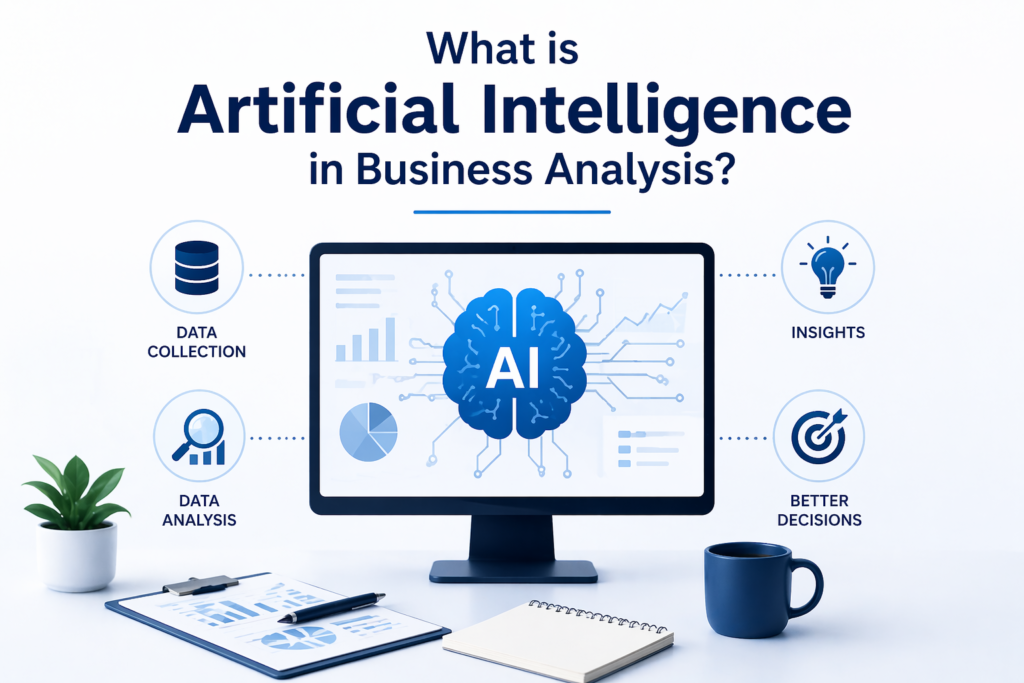
Artificial Intelligence in business analysis refers to the use of advanced technologies such as machine learning, data analytics, and automation to improve business decision-making.
It involves analyzing structured and unstructured data to identify trends, predict outcomes, and optimize processes. AI-powered systems can continuously learn from data, improving their accuracy over time.
This approach allows businesses to move from reactive decision-making to proactive and predictive strategies.
Role of AI in Business Analysis
AI plays a crucial role in modern business environments. Its impact can be seen across multiple areas:
1. Data Processing at Scale
AI systems can analyze massive datasets in seconds, providing insights that would take humans much longer to uncover.
2. Predictive Analytics
Businesses use AI to forecast future trends, customer behavior, and market demands.
3. Automation of Tasks
Repetitive analytical tasks are automated, allowing teams to focus on strategic planning.
4. Decision Support
AI provides accurate recommendations based on real-time data analysis.
5. Pattern Recognition
AI identifies hidden patterns and correlations in complex datasets.
How AI is Used in Business Analysis
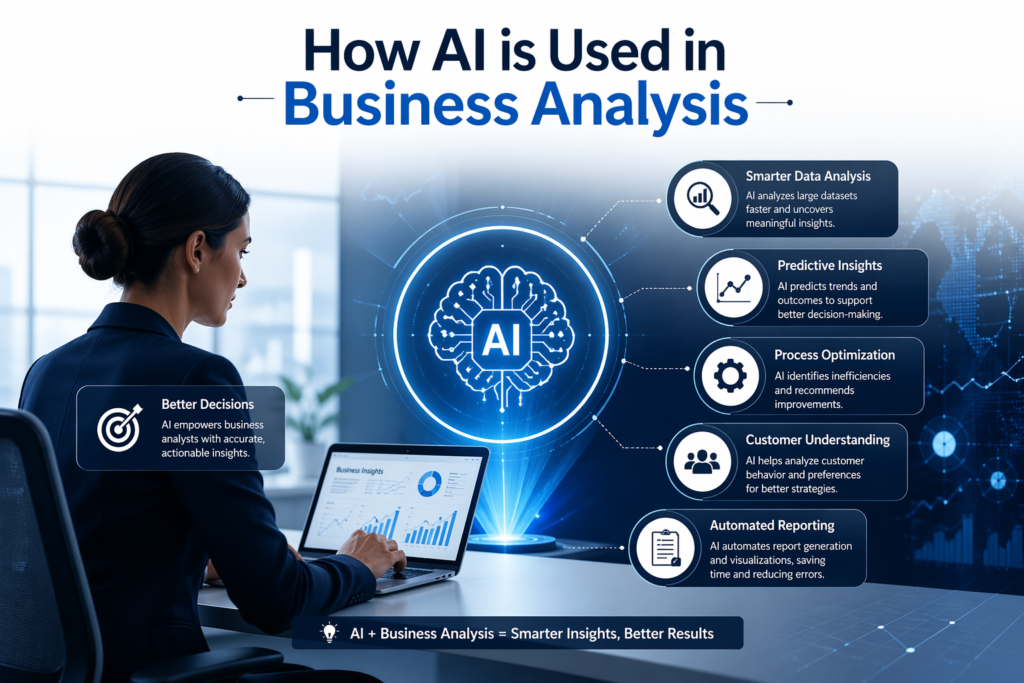
AI is applied in various business functions:
- Customer behavior analysis
- Sales forecasting
- Financial risk analysis
- Market trend analysis
- Operational performance tracking
These applications help organizations improve efficiency and make informed decisions.
To understand how AI works in customer insights, read:
AI in Customer Behavior Analysis
https://poweraiengine.com/ai-in-customer-behavior-analysis/
Benefits of Artificial Intelligence in Business Analysis
AI offers significant advantages:
- Faster and more accurate decision-making
- Reduced operational costs
- Improved efficiency
- Better customer insights
- Enhanced business performance
By leveraging AI, businesses can gain a competitive edge in their industries.2026.
AI Tools Used in Business Analysis
Modern businesses use a variety of AI tools:
- Machine learning platforms
- Predictive analytics software
- Business intelligence tools
- Data visualization platforms
- Natural language processing systems
These tools help transform raw data into actionable insights.
Applications of AI Across Industries
AI in business analysis is not limited to one sector. It is widely used in:
Retail
Understanding customer preferences and improving sales strategies
Finance
Detecting fraud and managing risks
Healthcare
Analyzing patient data and improving services
Marketing
Targeting the right audience with personalized campaigns
Future of Artificial Intelligence in Business Analysis 2026 and Beyond
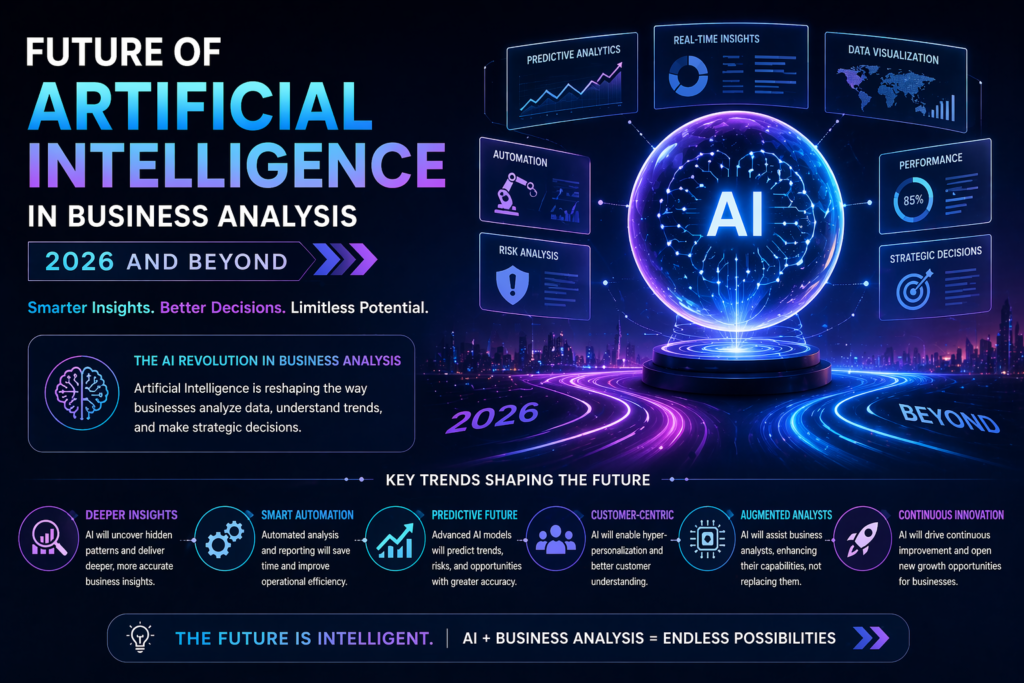
The future of AI in business analysis is extremely promising. As technology evolves, businesses will benefit from:
- Fully automated decision-making systems
- Advanced predictive analytics
- Real-time global data processing
- Integration with generative AI
Companies that adopt AI early will have a strong competitive advantage.e market.
For more detailed information about AI concepts:
Artificial Intelligence Overview (Wikipedia)
Challenges of Using AI in Business Analysis
Despite its benefits, AI also presents challenges:
- Data privacy concerns
- High implementation costs
- Need for skilled professionals
- Dependence on data quality
Businesses must address these challenges to maximize AI’s potential.
Why AI is Important for Modern Businesses
AI has become a core component of business strategy. It enables organizations to:
- Understand customer needs
- Improve operational efficiency
- Make data-driven decisions
- Stay ahead of competitors
Businesses today rely heavily on AI-powered analytics to improve decision-making. From forecasting trends to understanding customer behavior, AI is becoming a core part of modern business strategy.
FAQ
What is Artificial Intelligence in Business Analysis?
It is the use of AI technologies to analyze business data and improve decision-making processes.
How does AI help in business analysis?
AI helps by analyzing data, predicting trends, and automating business processes.
What are the benefits of AI in business analysis?
AI improves accuracy, saves time, reduces costs, and enhances decision-making.
Is AI replacing business analysts?
No, AI supports business analysts by automating tasks, not replacing them.
What is the future of AI in business analysis?
AI will become more advanced, enabling fully automated and real-time business decision systems.
Conclusion
Artificial Intelligence Business Analysis is transforming how organizations operate in 2026. By leveraging AI technologies, businesses can make smarter decisions, improve efficiency, and gain a competitive advantage.
As AI continues to evolve, its role in business analysis will become even more critical for success in the digital era.