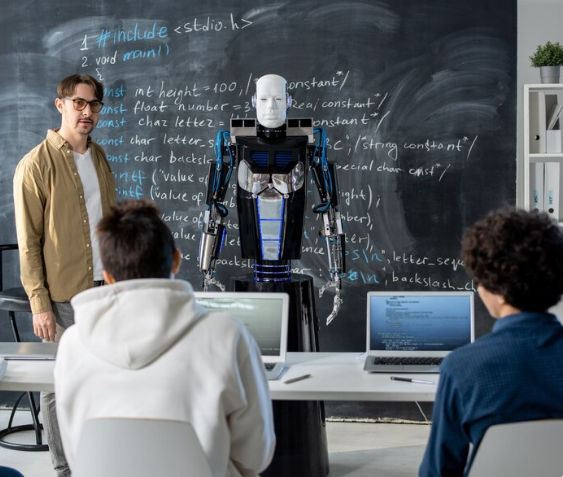
Explore the pros and cons of AI in workplace and education. Learn how artificial intelligence improves productivity and learning while addressing ethical, job, and data privacy challenges.
Pros and Cons of AI in Workplace and Education
Artificial Intelligence (AI) is rapidly transforming the way we work and learn. From automated business processes to intelligent learning systems, AI has become a powerful force shaping modern workplaces and educational institutions. While AI offers significant advantages such as increased efficiency and personalized experiences, it also raises concerns related to job security, ethics, and data privacy.
This article explores the pros and cons of AI in workplace and education, helping businesses, educators, and students understand its impact and future potential.
Understanding AI in Workplace and Education

AI refers to computer systems capable of performing tasks that typically require human intelligence, such as decision-making, problem-solving, and language understanding. In workplaces, AI is used for automation, analytics, customer support, and recruitment. In education, it enhances learning through smart tutoring systems, automated assessments, and personalized content delivery.
Pros of AI in the Workplace
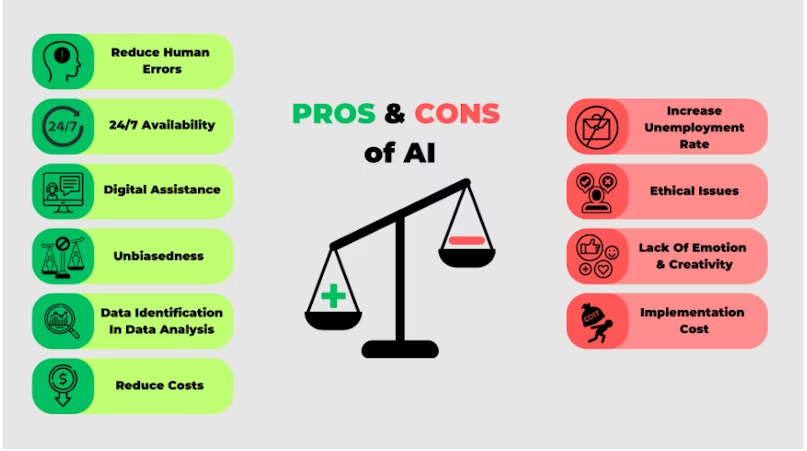
Increased Productivity and Efficiency
AI automates repetitive and time-consuming tasks such as data entry, scheduling, and report generation. This allows employees to focus on strategic and creative work, significantly improving productivity.
Better Decision-Making
AI analyzes large volumes of data quickly and accurately, providing insights that help businesses make informed decisions. Predictive analytics enables companies to anticipate market trends and customer behavior.
Enhanced Customer Experience
AI-powered chatbots and virtual assistants provide 24/7 customer support, ensuring faster responses and improved satisfaction.
Cost Reduction
By automating processes and minimizing errors, AI reduces operational costs and improves overall efficiency.
Cons of AI in the Workplace
Job Displacement Risks
One of the biggest concerns is that AI may replace certain jobs, especially roles involving repetitive tasks. This creates fear of unemployment among workers.
High Implementation Costs
Developing and integrating AI systems requires significant investment in technology, infrastructure, and skilled professionals.
Ethical and Bias Issues
AI systems may inherit biases from training data, leading to unfair decisions in hiring, promotions, or performance evaluation.
Pros of AI in Education
Personalized Learning Experience
AI adapts educational content to individual student needs, learning speed, and preferences, making education more effective and engaging.
For a deeper understanding, read our complete guide on
Pros and Cons of AI in Education: A Complete Guide to Benefits, Challenges, and Future Impact
Improved Teaching Support
AI assists teachers by automating grading, tracking student progress, and identifying learning gaps, allowing educators to focus more on teaching.
Increased Accessibility
AI tools support students with disabilities through speech-to-text, text-to-speech, and language translation features.
Smart Assessment Systems
AI-based assessments provide instant feedback, helping students improve faster and learn from mistakes.
Cons of AI in Education
Data Privacy Concerns
Educational AI systems collect large amounts of student data, raising concerns about data security and misuse.
Over-Dependence on Technology
Excessive reliance on AI may reduce critical thinking, creativity, and human interaction among students.
Digital Divide
Not all students have equal access to AI-powered tools, creating inequality in education systems.
Ethical and Social Challenges of AI
The use of AI in workplace and education must be guided by ethical standards. Transparency, fairness, and accountability are essential to prevent misuse. Governments and institutions must develop clear AI policies and regulations.
According to AI Ethics and Responsible Artificial Intelligence, responsible AI development focuses on transparency, explainability, and fairness to build trust in AI systems.
(Source: IBM – Artificial Intelligence Ethics)
Future Impact of AI in Workplace and Education
AI will continue to evolve, reshaping jobs and learning environments. Instead of replacing humans entirely, AI is expected to work alongside them, creating new roles and opportunities. Upskilling and reskilling will be essential to adapt to an AI-driven future.
FAQs: Pros and Cons of AI in Workplace and Education
Q1: Is AI replacing human jobs completely?
No, AI is more likely to transform jobs rather than replace them entirely. It creates new roles while automating routine tasks.
Q2: How does AI improve learning outcomes?
AI provides personalized learning, instant feedback, and adaptive content, helping students understand concepts more effectively.
Q3: What are the main risks of AI in education?
Major risks include data privacy issues, over-reliance on technology, and unequal access to AI tools.
Q4: Can AI make workplaces more efficient?
Yes, AI improves efficiency by automating processes, reducing errors, and supporting data-driven decisions.
Final Thoughts
The pros and cons of AI in workplace and education highlight the importance of balanced and responsible implementation. AI offers immense benefits such as productivity, personalization, and innovation, but it also presents challenges related to ethics, employment, and data security. By adopting ethical practices and investing in human skills, organizations and educational institutions can maximize AI’s potential while minimizing its risks.