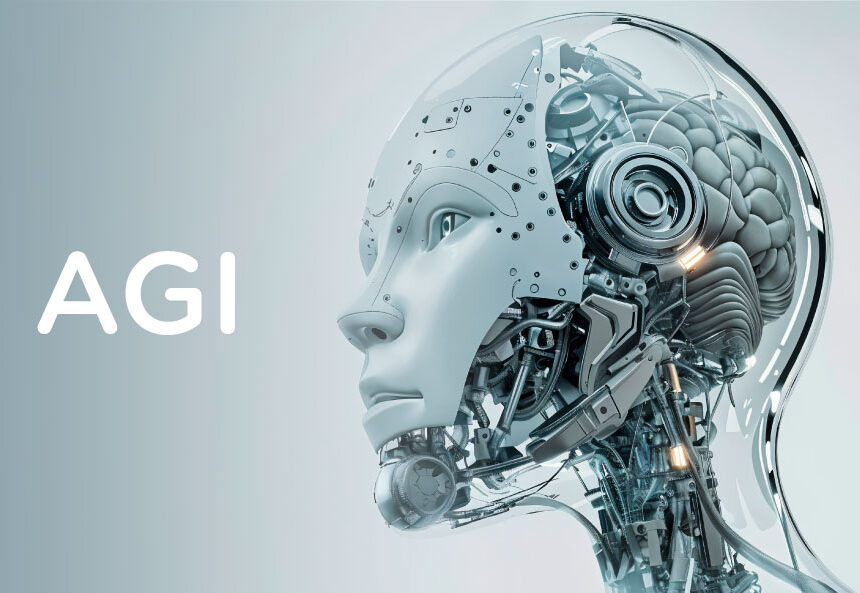
What Is AGI? Artificial General Intelligence Explained Simply (2025 Guide)
What is AGI? Learn the complete meaning of Artificial General Intelligence, how it works, real examples, differences between AI and AGI, benefits, risks, and future impact in this beginner-friendly 2025 guide.
What Is AGI (Artificial General Intelligence)?
Artificial General Intelligence (AGI) is one of the most discussed and futuristic concepts in modern technology. If you are wondering what is AGI, simply put, AGI refers to a type of artificial intelligence that can think, learn, and perform tasks like a human being—not just one task, but any intellectual task.
Unlike today’s AI systems that are limited to specific jobs, AGI aims to replicate human-level intelligence, including reasoning, problem-solving, creativity, learning from experience, and adapting to new situations without human intervention.
Understanding AGI in Simple Words
To understand AGI better, imagine a machine that can:
- Learn new skills on its own
- Understand emotions and context
- Solve problems it has never seen before
- Perform multiple jobs just like a human
That is Artificial General Intelligence.
Current AI systems are powerful but narrow. AGI, however, is designed to be flexible, adaptive, and self-learning.
Types of Artificial Intelligence

1. Narrow AI (Weak AI)
Narrow AI is built for one specific task.
Examples:
- Chatbots
- Face recognition
- Recommendation systems
- Voice assistants
These systems cannot perform tasks outside their programmed domain.
2. Artificial General Intelligence (AGI)
AGI can:
- Understand multiple subjects
- Transfer knowledge between tasks
- Think logically and creatively
- Learn independently
AGI does not yet fully exist, but research is rapidly progressing.
3. Artificial Super Intelligence (ASI)
ASI is a hypothetical stage where AI surpasses human intelligence in every aspect.
How AGI Is Different from AI
| Feature | AI (Narrow AI) | AGI |
|---|---|---|
| Learning ability | Limited | Human-level |
| Task flexibility | Single task | Multiple tasks |
| Adaptability | Low | High |
| Reasoning | Rule-based | Logical & creative |
| Autonomy | Dependent | Independent |
How Does AGI Work?
AGI combines multiple advanced technologies such as:
Machine Learning
Allows systems to learn from data and improve performance.
Deep Learning
Uses neural networks inspired by the human brain.
Cognitive Computing
Mimics human thought processes like reasoning and decision-making.
Reinforcement Learning
Learns through trial and error, just like humans.
AGI systems aim to integrate all these approaches into one unified intelligence.
Real-World Applications of AGI (Future Potential)
Although AGI is still under development, its future applications could include:
Healthcare
- Accurate diagnosis
- Personalized treatment plans
- Predictive healthcare systems
Education
- Human-like AI tutors
- Personalized learning experiences
- Skill-based adaptive education
Business & Economy
- Strategic decision-making
- Market prediction
- Autonomous management systems
Scientific Research
- Discovering new medicines
- Solving climate change
- Space exploration
Benefits of Artificial General Intelligence
Human-Level Problem Solving
AGI can solve complex problems faster and more efficiently.
Continuous Learning
It improves itself without constant human updates.
Productivity Boost
AGI could automate high-level intellectual tasks.
Innovation Acceleration
Scientific and technological progress could increase dramatically.
Risks and Challenges of AGI
Ethical Concerns
Who controls AGI? How do we prevent misuse?
Job Displacement
AGI may replace many human jobs if not managed responsibly.
Safety Risks
Uncontrolled AGI could make decisions harmful to humanity.
High Development Cost
AGI requires massive computational and research resources.
AGI vs Human Intelligence
AGI aims to match human intelligence, not emotions or consciousness fully. Humans still excel in:
- Emotional intelligence
- Moral judgment
- Creativity driven by experience
However, AGI may eventually surpass humans in speed, memory, and accuracy.
AGI and AI Agents (Important Connection)
To understand AGI better, you should also learn about AI agents.
Read this detailed guide:
What Is an AI Agent? A Complete Beginner-Friendly Guide to Intelligent Systems 2025
This internal resource explains how intelligent agents act as building blocks toward AGI development.
Is AGI Possible in 2025?

Experts have mixed opinions:
- Some believe AGI could arrive within the next 10–20 years
- Others argue true AGI may take much longer
Major tech companies like OpenAI, Google DeepMind, and others are heavily investing in AGI research.
For a technical definition of AGI, you can also refer to this authoritative source:
Artificial General Intelligence – Wikipedia
Frequently Asked Questions (FAQs)
Q1What is AGI in simple terms?
AGI is an artificial intelligence that can think, learn, and perform tasks like a human across multiple domains.
Q2Is AGI already developed?
No, AGI is still under research and development.
Q3What is the difference between AI and AGI?
AI is task-specific, while AGI can handle multiple tasks with human-level intelligence.
Q4Can AGI replace humans?
AGI may replace certain jobs but also create new opportunities if used responsibly.
Q5Is AGI dangerous?
AGI can be risky if not regulated, but proper ethical controls can reduce dangers.
Final Thoughts
Artificial General Intelligence represents the next major evolution in artificial intelligence. Understanding what is AGI is essential for students, professionals, and businesses preparing for the future.
While AGI promises revolutionary benefits in healthcare, education, science, and economics, it also brings serious ethical and safety challenges. The key lies in responsible development, strong governance, and human-centered design.
AGI is not just a technology—it is a future-shaping force that will redefine how humans and machines coexist.