What Is an AI Agent? Definition, Examples & Complete Guide
Learn what an AI agent is, how it works, real examples, pros & cons, and how AI agents differ from simple chatbots. A beginner-friendly guide.
What Is an AI Agent? – Complete Guide (2026)
Artificial Intelligence is not just about chatbots that answer your questions. In the evolving world of AI, AI agents represent a new class of intelligent systems that can act independently, make decisions, and complete tasks on behalf of users. Unlike simple tools, AI agents combine reasoning, planning, and action to solve real tasks effectively.
What Does “AI Agent” Mean?
An AI agent is software designed to perceive its environment, make decisions, and take actions to achieve specific goals — often with minimal human supervision. It is capable of understanding data, planning steps, and performing tasks automatically.
AI agents are a step above chatbots or basic machine learning models because they can adapt, respond dynamically to changing situations, and often integrate tools or APIs to perform actions..
An AI agent works using intelligent systems similar to an AI engine that processes data, understands context, and makes decisions.
How AI Agents Work (Simplified)
Here’s a straightforward look at how an AI agent functions:
1. Perception
The agent gets information from its digital environment (like data, APIs, or user inputs).
2. Decision & Planning
Using internal logic (often powered by LLMs), the agent determines the best course of action.
3. Action Execution
The agent performs tasks — like booking a trip, summarizing data, or automating workflows.
4. Adaptation
The agent learns from outcomes and adjusts plans for better efficiency.
According to Google machine learning guidelines, intelligent systems rely on structured data, learning models, and continuous evaluation.
Examples of AI Agents in Real Life
AI agents are becoming more common in tech and business:
AI agents in logistics or finance that analyze data and plan actions
These examples show how agents move beyond simple “ask and reply” style interactions to actually completing work.
Virtual assistants that book appointments or manage schedules
Customer support bots that resolve queries autonomously
Automated workflow tools that handle repetitive tasks for teams
Benefits of AI Agents
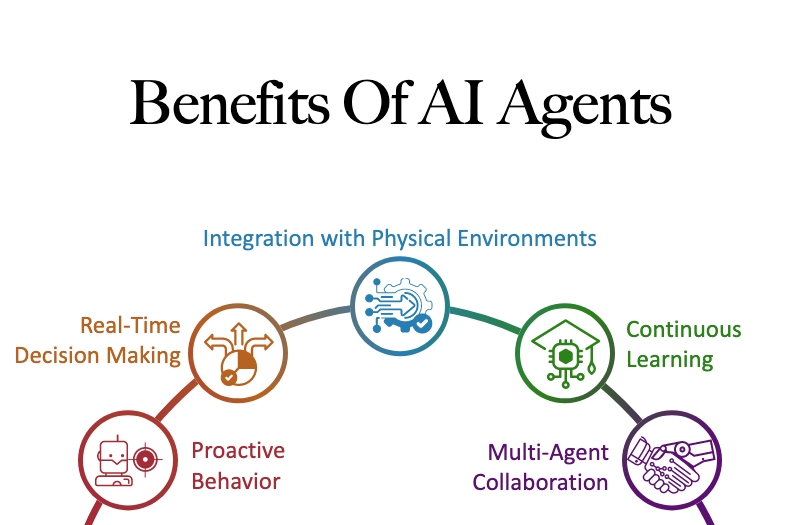
Automate repetitive tasks
Improve decision-making
Increase efficiency and accuracy
Save time and reduce human error
Learn and get better over time
AI Agent vs Traditional AI Tools
| Feature | AI Agent | Traditional AI Tool |
|---|---|---|
| Autonomy | Can act independently | Needs human commands |
| Task Planning | Makes multi-step plans | Executes single tasks |
| Tool Integration | Uses APIs, web interactions | Mostly reports/outputs |
| Adaptation | Learns over time | Limited learning |
As you can see, agents are more capable of continuous decision-making and execution than simple tools.
To understand advanced intelligence beyond agents, you can read our detailed guide on What Is AGI in AI.
Pros and Cons of AI Agents
Pros
- Saves time on repetitive tasks
- Can learn and adapt
- Works across platforms and apps
- Improves efficiency in workflows
Cons
- Still requires human oversight
- Technical setup can be complex
- Security & ethical risks if not monitored properly
External experts warn that as agents grow more autonomous, safety and governance become more critical to prevent misuse.
Industry experts have also highlighted the potential risks of autonomous AI systems in recent research reports.
Use Cases of AI Agents
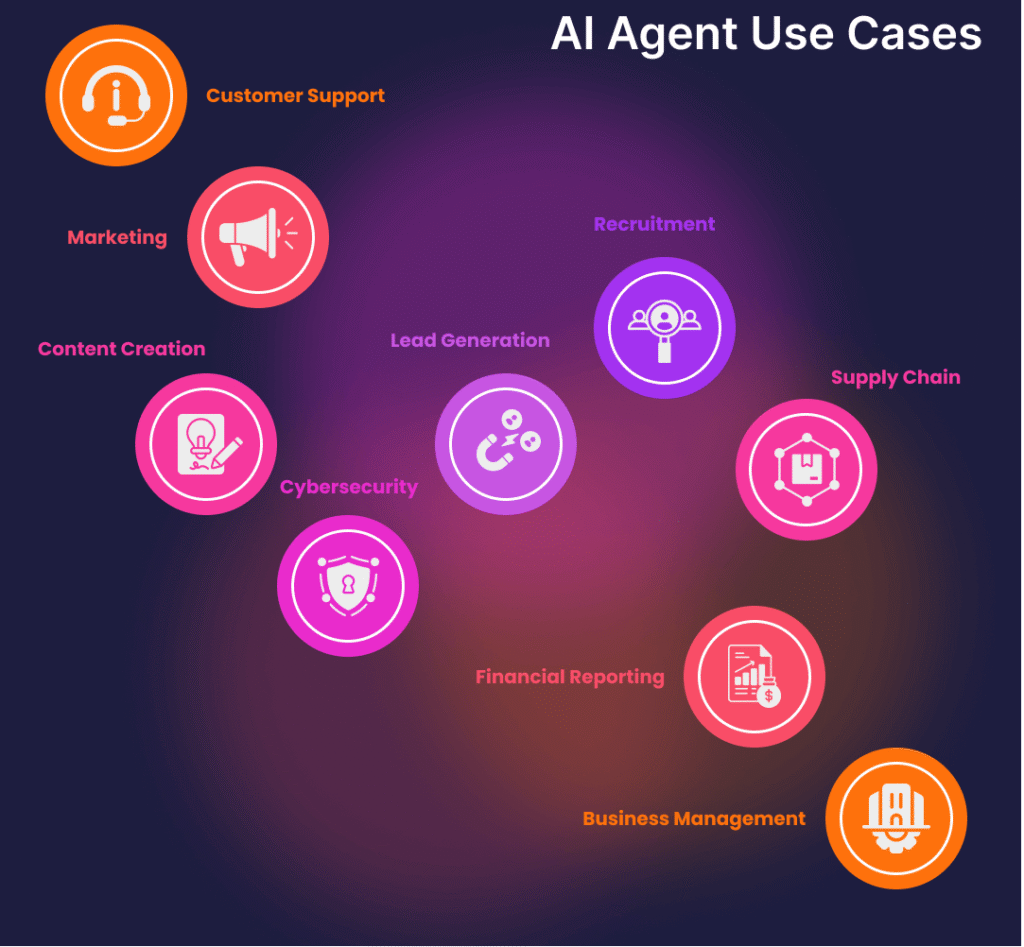
Productivity
Agents can organize schedules, send emails, and manage workflows.
Technical Tasks
Developers use agents to automate code tests, monitoring, or data extraction.
Business Operations
Agents help with inventory management, customer analytics, or automated reporting.
These real use cases demonstrate why AI agents are becoming a strategic asset in many industries.
Frequently Asked Questions (FAQs)
Q1: Are AI agents the same as chatbots?
No. Chatbots only respond to prompts, while AI agents can plan and execute tasks on their own.
Q2: Can AI agents replace human workers?
They can assist with repetitive work but still need human oversight for critical decisions.
Q3: Where are AI agents used?
Customer service, automation tools, productivity systems, and even autonomous workflows in business.
Q4: Are AI agents safe to use?
Yes, with proper monitoring, policies, and ethical guardrails in place.
Final Thoughts
AI agents are a powerful evolution in artificial intelligence. They combine perception, reasoning, and action to help users complete tasks more efficiently and intelligently. While they are not perfect, when used properly they can transform how we work and automate complex processes.
AI agents are also shaping the future of artificial intelligence, especially in automation and decision-making.
To explore the broader landscape of intelligent systems, you can also read our detailed article on What Is AGI in AI — another key topic as AI continues to evolve.