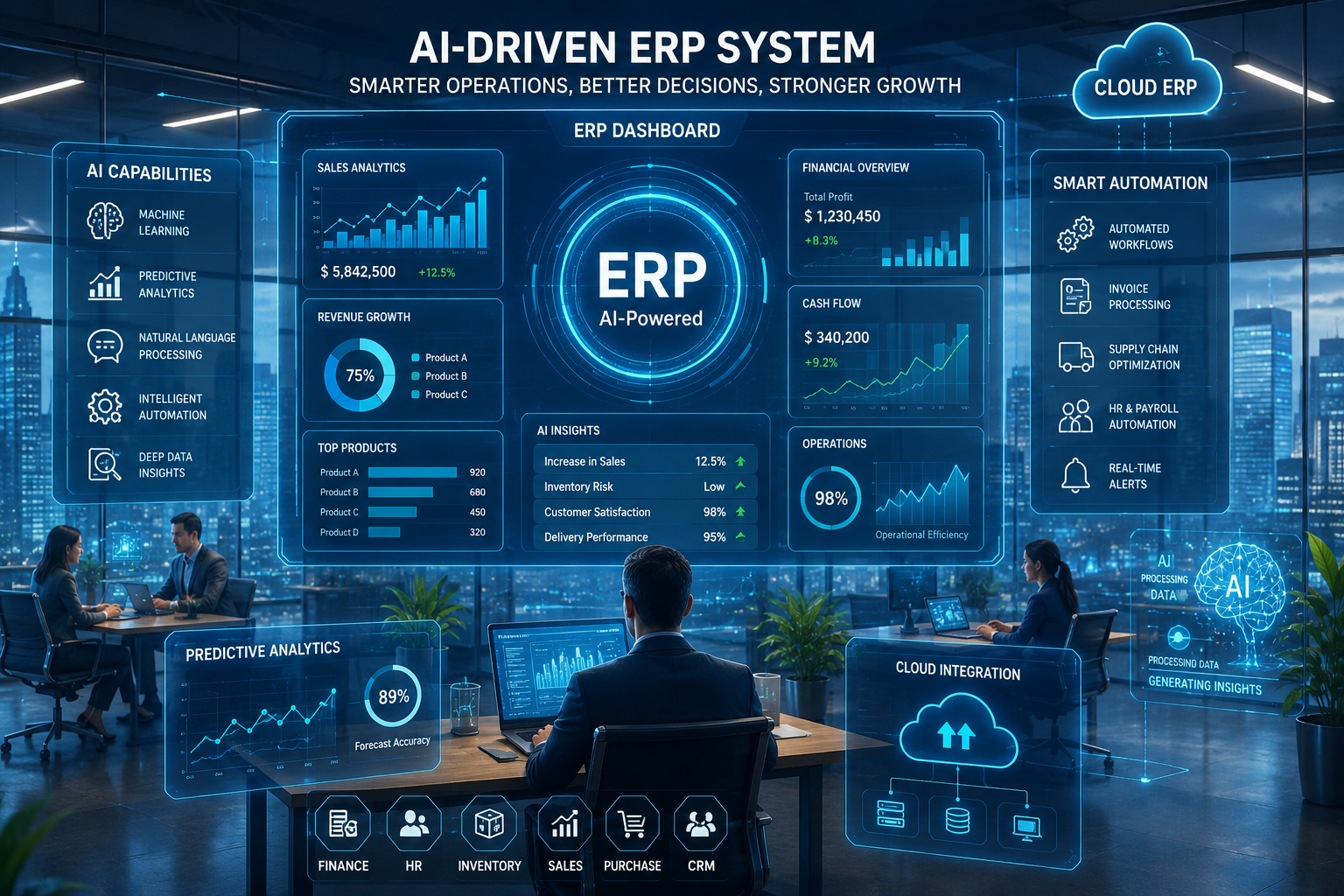
AI-Driven ERP Systems in 2026 | Smarter Business Automation
Discover how AI-driven ERP systems are transforming business operations in 2026 with automation, predictive analytics, smart workflows, and real-time decision-making. Learn benefits, features, challenges, and future trends.
AI-Driven ERP Systems: The Future of Smart Business Management
Businesses in 2026 are evolving faster than ever, and traditional management systems are no longer enough to keep up with modern operational demands. Companies now require intelligent platforms that can automate repetitive work, analyze large volumes of data, improve decision-making, and increase productivity. This is where AI-Driven ERP Systems are changing the game.
Enterprise Resource Planning (ERP) software has long helped organizations manage accounting, human resources, inventory, sales, and customer operations from a single platform. But when artificial intelligence is integrated into ERP systems, businesses gain a powerful advantage. AI can predict trends, automate workflows, identify risks, and provide real-time insights that improve efficiency across departments.
Today, companies of all sizes are adopting AI-powered ERP solutions to reduce costs, increase accuracy, and create smarter business strategies. From manufacturing and healthcare to retail and finance, AI-driven ERP platforms are becoming the backbone of digital transformation.
If you want to understand how modern enterprises are using intelligent ERP systems to stay competitive, this guide explains everything you need to know.
Businesses now require intelligent platforms that can automate repetitive work AI in Digital Marketing 2026
What Are AI Driven ERP Systems?
AI-Driven ERP Systems are advanced enterprise management platforms enhanced with artificial intelligence technologies such as:
- Machine Learning (ML)
- Natural Language Processing (NLP)
- Predictive Analytics
- Intelligent Automation
- Data Forecasting
- AI Chatbots
- Smart Reporting
Unlike traditional ERP software, AI-powered systems can learn from historical data, recognize patterns, and make intelligent recommendations automatically.
For example:
- AI can predict inventory shortages before they happen.
- Smart algorithms can forecast sales trends.
- Automated workflows can reduce manual data entry.
- AI assistants can answer employee queries instantly.
This combination of ERP and AI helps businesses operate faster, smarter, and more efficiently.
Why Businesses Are Adopting AI-Powered ERP Solutions
The growing demand for automation and real-time decision-making is driving organizations toward intelligent ERP technologies.
According to recent enterprise technology trends shared by
Gartner, AI-powered business automation is rapidly growing across global industries.
Key Reasons Companies Are Switching to AI ERP Systems
1. Improved Operational Efficiency
AI automates repetitive tasks such as invoice processing, payroll management, inventory tracking, and report generation. This reduces manual workload and saves valuable time.
2. Better Decision-Making
AI-powered analytics provide accurate business insights using real-time data. Companies can make informed decisions faster with predictive reports and automated recommendations.
3. Reduced Human Errors
Manual data entry often causes costly mistakes. AI systems minimize errors through automated validation and intelligent processing.
4. Predictive Business Intelligence
AI helps organizations forecast demand, customer behavior, sales performance, and financial risks before problems occur.
5. Enhanced Customer Experience
AI-driven ERP systems improve customer service by analyzing customer interactions, automating support workflows, and personalizing communication personalized suggestions.
Core Features of AI-Driven ERP Systems
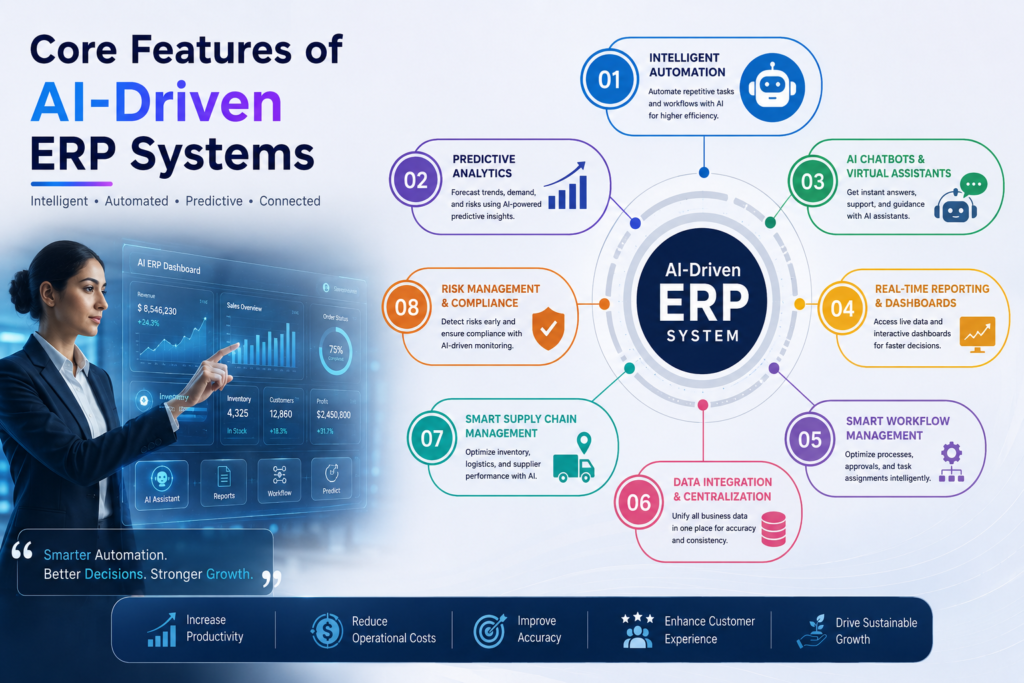
Modern ERP platforms powered by AI include advanced features that improve business management.
Intelligent Automation
AI automates routine business operations such as:
- Invoice approvals
- Employee onboarding
- Data synchronization
- Procurement workflows
- Supply chain tracking
Automation reduces operational delays and improves productivity.
Predictive Analytics
AI systems analyze historical data and predict future trends. Businesses can forecast:
Learn more about predictive technologies in our guide on
Machine Learning in Business Analytics
- Sales growth
- Market demand
- Inventory requirements
- Financial risks
- Customer behavior
Predictive analytics helps organizations plan more effectively.
AI Chatbots and Virtual Assistants
Many ERP systems now include AI-powered assistants that can:
- Answer employee questions
- Generate reports
- Schedule tasks
- Provide workflow updates
- Assist customer support teams
This improves communication and reduces response times.
Real-Time Reporting
Traditional reporting systems often take hours or days to generate insights. AI ERP platforms deliver real-time dashboards and analytics instantly.
Smart Supply Chain Management
AI can optimize logistics, supplier relationships, inventory levels, and warehouse operations using real-time monitoring and predictive forecasting.
Industries Benefiting from AI-Driven ERP Systems
AI-powered ERP solutions are transforming nearly every industry.
Manufacturing
Manufacturers use AI ERP software for:
- Predictive maintenance
- Inventory optimization
- Production planning
- Quality control automation
These tools reduce downtime and improve production efficiency.
Healthcare
Healthcare organizations use intelligent ERP systems to manage:
- Patient records
- Resource allocation
- Staff scheduling
- Financial operations
- Compliance tracking
AI improves operational accuracy and patient care management.
Retail and E-Commerce
Retail companies use AI ERP solutions to:
- Analyze customer buying behavior
- Manage inventory automatically
- Forecast demand
- Personalize marketing campaigns
This increases customer satisfaction and sales performance.
Finance
Financial institutions use AI-driven ERP systems for:
- Fraud detection
- Risk analysis
- Automated accounting
- Regulatory compliance
- Financial forecasting
AI helps improve security and operational transparency.
Benefits of AI-Driven ERP Systems
Businesses adopting intelligent ERP solutions gain several competitive advantages.
Increased Productivity
Automation eliminates repetitive manual tasks, allowing employees to focus on strategic activities.
Faster Business Processes
AI accelerates workflows by reducing delays in approvals, reporting, and data processing.
Better Data Accuracy
AI-powered validation systems improve data reliability and minimize operational errors.
Cost Reduction
Businesses save money by reducing labor costs, operational inefficiencies, and unnecessary resource usage.
Scalable Operations
AI ERP systems can adapt to business growth without requiring major infrastructure changes.
Challenges of Implementing AI ERP Solutions
Although AI-powered ERP systems provide many advantages, businesses may face implementation challenges.
High Initial Investment
Advanced ERP platforms require upfront costs for software, customization, training, and integration.
Employee Training
Organizations must train staff to use intelligent ERP tools effectively.
Data Security Concerns
Since ERP systems handle sensitive business information, cybersecurity becomes critical.
Integration Complexity
Some companies struggle to integrate AI ERP platforms with existing business systems.
Despite these challenges, long-term benefits often outweigh implementation difficulties.
Future Trends in AI-Driven ERP Systems
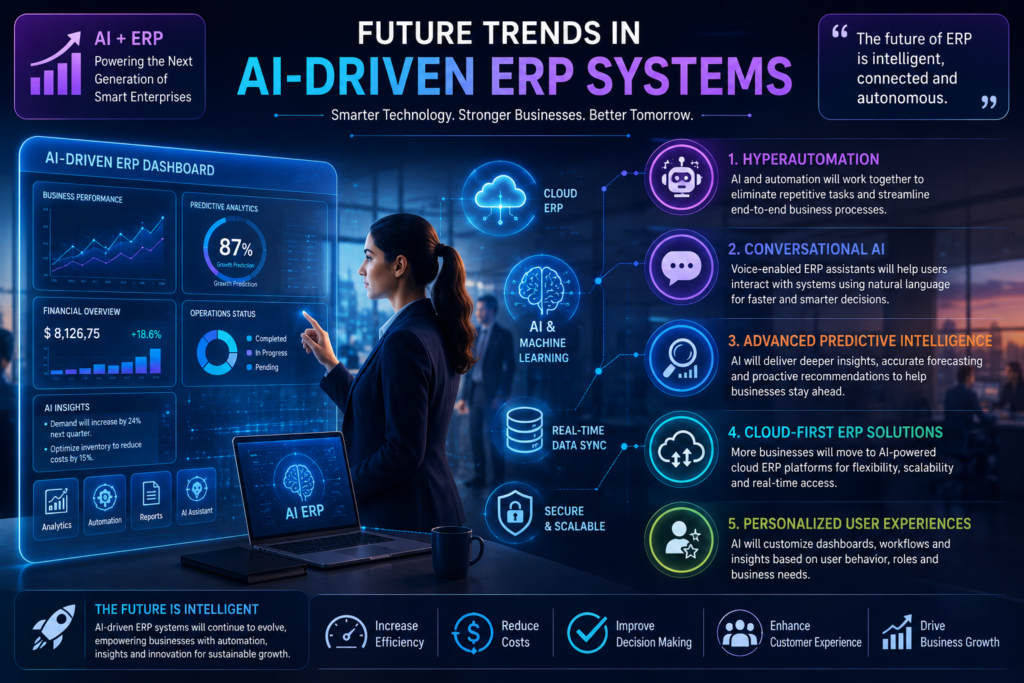
AI ERP technology continues to evolve rapidly. Several future trends are shaping the next generation of enterprise management platforms.
Hyperautomation
Businesses are moving toward fully automated workflows You may also like:
AI Business Analysis Guide
powered by AI and robotic process automation (RPA).
Conversational AI
Voice-enabled ERP assistants will allow users to interact with systems using natural language commands.
Advanced Predictive Intelligence
Future ERP systems will provide even more accurate forecasting and risk analysis capabilities.
Cloud-Based AI ERP Platforms
Cloud ERP solutions are becoming increasingly popular because they offer flexibility, scalability, and remote accessibility.
Personalized User Experiences
AI will customize dashboards, workflows, and recommendations based on user behavior and business roles.
How to Choose the Right AI ERP System
Selecting the right ERP platform is essential for long-term success.
Consider These Factors:
- Business size and industry requirements
- Integration capabilities
- AI automation features
- Security and compliance
- Scalability options
- Customer support quality
- Cloud vs on-premise deployment
Organizations should choose ERP systems that align with their operational goals and future growth plans.
Why AI-Driven ERP Systems Matter in 2026
The business world is becoming increasingly data-driven and automated. Companies that continue relying on outdated systems may struggle to compete in fast-changing markets.
AI-Driven ERP Systems help businesses:
- Improve operational speed
- Make smarter decisions
- Reduce costs
- Increase efficiency
- Deliver better customer experiences
As artificial intelligence continues to evolve, ERP platforms will become even more intelligent and essential for modern business success.
Businesses that adopt AI-powered enterprise solutions today are positioning themselves for stronger growth, improved innovation, and long-term competitive advantage.
FAQs About AI Driven ERP Systems
What is an AI-driven ERP system?
An AI-driven ERP system is enterprise software enhanced with artificial intelligence technologies that automate processes, analyze data, and improve decision-making.
How does AI improve ERP systems?
AI improves ERP systems through automation, predictive analytics, smart reporting, real-time insights, and intelligent workflow management.
Which industries use AI ERP software?
Industries such as manufacturing, healthcare, finance, retail, logistics, and e-commerce widely use AI-powered ERP solutions.
Are AI-driven ERP systems expensive?
Initial implementation costs can be high, but long-term savings from automation and efficiency improvements often provide strong returns on investment.
What is the future of AI ERP systems?
Future AI ERP systems will focus on hyperautomation, cloud integration, conversational AI, predictive intelligence, and personalized business workflows.
Final Thoughts
AI-driven ERP systems are no longer optional for businesses aiming to stay competitive in 2026. These intelligent platforms combine automation, predictive analytics, and real-time insights to transform how organizations manage operations.
From improving productivity and reducing costs to enhancing customer experiences and decision-making, AI ERP solutions are redefining enterprise management across industries.
Companies that embrace intelligent ERP technology now will be better prepared for the future of digital business transformation.
For more AI business technology insights and future-focused enterprise solutions, visit Power AI Engine