AI Tools for Automating Admissions Decisioning in Higher Education (2026 SEO Guide)
Learn how AI tools for automating admissions decisioning in higher education. Discover student engagement, CRM integration, workload reduction, and future trends.
Introduction
Higher education institutions are under constant pressure to process thousands of applications quickly while maintaining fairness and accuracy. Traditional admission systems often struggle with delays, human bias, and administrative overload.
This is where AI tools for automating admissions decisioning in higher education are transforming the landscape. These tools help universities analyze applications, predict student success, and streamline decision-making processes.
But AI is not just about automation—it’s about creating smarter, more personalized, and efficient admission systems that benefit both institutions and students.
For a complete overview, read AI in Higher Education
What Are AI Tools for Admissions Decisioning?
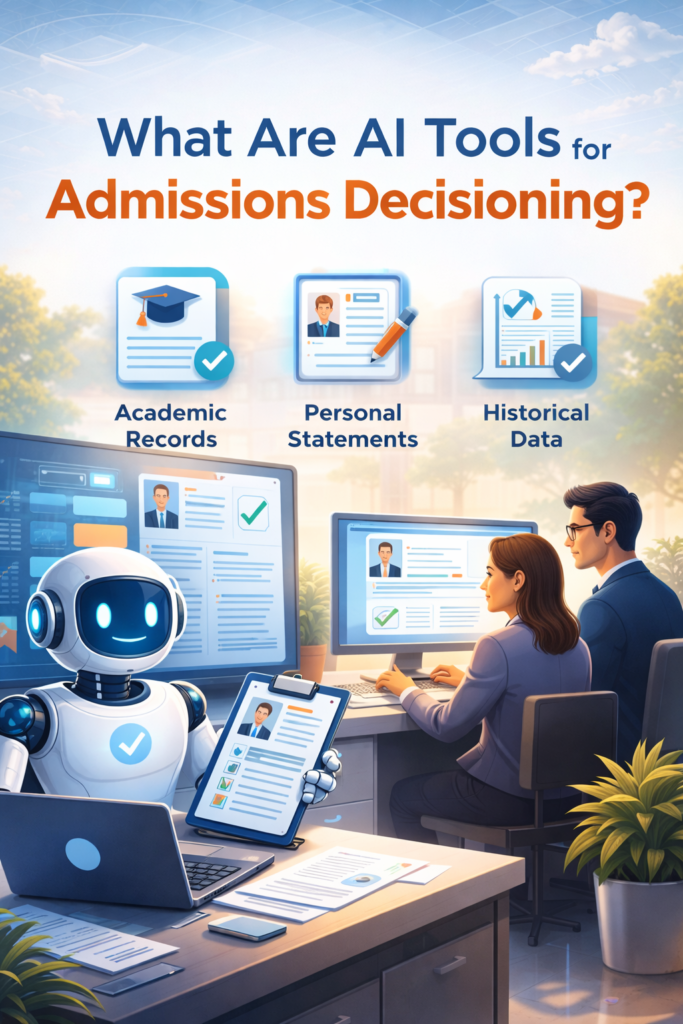
AI-powered admission tools use technologies like:
- Machine learning
- Natural language processing (NLP)
- Predictive analytics
These systems evaluate:
- Academic records
- Personal statements
- Behavioral insights
- Historical admission data
Instead of manual screening, AI identifies the most suitable candidates in seconds.
How AI Automates Admissions Decisioning
AI solves major challenges in admissions by introducing automation and intelligence.
Faster Application Processing
AI processes thousands of applications within minutes, reducing delays significantly.
Smarter Decision-Making
AI uses data-driven insights to improve selection accuracy and consistency.
Bias Reduction
Properly trained AI systems reduce human bias, making admissions more fair.
Predictive Analytics
AI predicts:
- Student performance
- Retention rates
- Graduation success
AI in Higher Education Student Engagement & Communication Channels
AI improves how universities communicate with students throughout the admission journey.
Personalized Communication
- Tailored emails
- Course recommendations
- Application updates
AI Chatbots
- 24/7 student support
- Instant query resolution
- Application guidance
Multi-Channel Engagement
AI enables communication across:
- SMS
- Live chat
This improves student experience and increases conversion rates.
Integrating AI in Higher Education Platforms with Campus CRMs
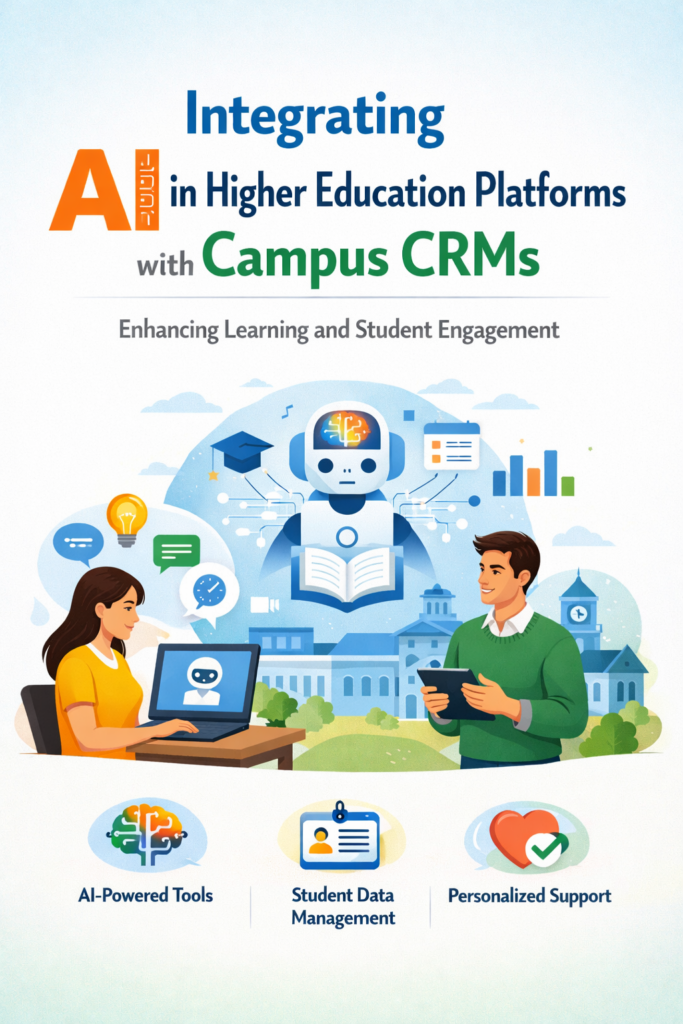
AI becomes even more powerful when integrated with campus CRMs.
Key Integration Benefits
- Centralized applicant data
- Automated workflows
- Real-time analytics
- Personalized student journeys
Why It Matters
Universities can:
- Track every applicant interaction
- Make real-time decisions
- Improve operational efficiency
Explore more Pros and Cons of AI in Education
Administrative Workload Reduction with AI
Admissions teams often spend hours on repetitive tasks. AI eliminates this burden.
Tasks AI Automates
- Application screening
- Document verification
- Interview scheduling
- Data entry
Real Impact
- Saves time
- Reduces costs
- Improves productivity
However, challenges also exist Disadvantages of AI in Education
Benefits of AI in Admissions Decisioning
Key Advantages
- Faster processing
- Better accuracy
- Scalable systems
- Improved student experience
- Reduced operational costs
AI helps institutions handle growing demand without increasing staff.
AI in Higher Education Platforms – Trends & Conferences
AI is a major focus in global education discussions.
Key Topics in AI Conferences
- Ethical AI in admissions
- Transparency in algorithms
- Fair decision-making
- AI governance
These insights help institutions stay ahead in adopting responsible AI.
Real-World Use Cases of AI in Admissions
Universities worldwide are using AI to:
- Process large volumes of applications
- Identify high-potential students
- Improve enrollment rates
- Reduce dropout rates
AI ensures better matching between students and programs.
For deeper insights Pros and Cons of AI in Workplace and Education
Challenges and Ethical Considerations
AI adoption comes with responsibilities.
Key Challenges
- Data privacy concerns
- Algorithm bias
- Lack of transparency
- Over-dependence on automation
Ethical Practices
- Regular audits
- Human oversight
- Transparent algorithms
Reference UNESCO AI in Education
Future of AI in Higher Education (2026 & Beyond)
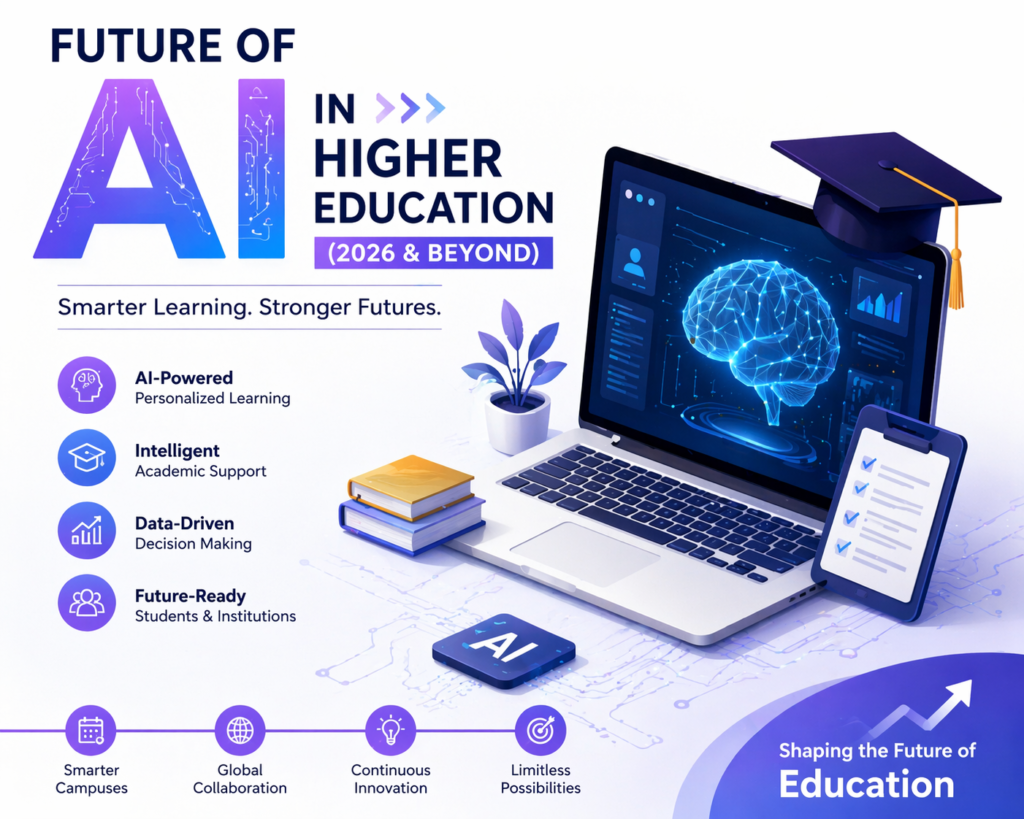
AI will continue to evolve rapidly.
Future Trends
- Hyper-personalized admissions
- AI-driven career guidance
- Advanced predictive analytics
- Fully automated admission systems
Explore future insights AI Future of Teaching & Learning 2026
FAQs
Q1: What are AI tools for admissions decisioning?
AI tools automate application evaluation using machine learning and data analysis.
Q2: How does AI improve student engagement?
Through personalized communication, chatbots, and automated updates.
Q3: Can AI replace human admissions officers?
No, AI supports decision-making but human oversight is still essential.
Q4: Is AI safe in admissions?
Yes, if implemented with proper ethical and privacy standards.
Q5: What is the biggest benefit of AI in admissions?
Efficiency, accuracy, and scalability.
Final Thoughts
AI is transforming admissions in higher education by making processes faster, smarter, and more efficient. From automating decision-making to enhancing student engagement and reducing administrative workload, AI offers a complete solution for modern institutions.
However, the real power of AI lies in balance. Institutions must combine AI capabilities with human judgment to ensure fairness and transparency.
As technology evolves, universities that adopt AI strategically will lead the future of education.